
When doing kitchen remodeling, one of the most debated choices is: open concept or closed kitchen? In this article, we walk you through the pros, cons, and hybrid options of both layouts. You’ll learn how each approach influences light, airflow, noise, storage, and lifestyle. By the end, you’ll know which layout fits your home best and how Complete Construction can bring it to life.
When planning Kitchen Remodeling, your first big question is often whether to go with an open concept or a closed kitchen layout. Which design will work best for your space, your lifestyle, and your budget?
It’s not just an aesthetic decision, the layout you choose affects light, ventilation, noise, storage, social interaction, and future resale value. In this post, we’ll dive deep into comparing open vs. closed kitchens, walk through hybrid options, and help you decide which approach suits you best.
What Is an Open Concept Kitchen?
An open concept kitchen removes (or limits) walls and barriers between the kitchen, dining room, and living areas. The goal is a seamless flow, where cooking, eating, and socializing share the same visual and physical space.
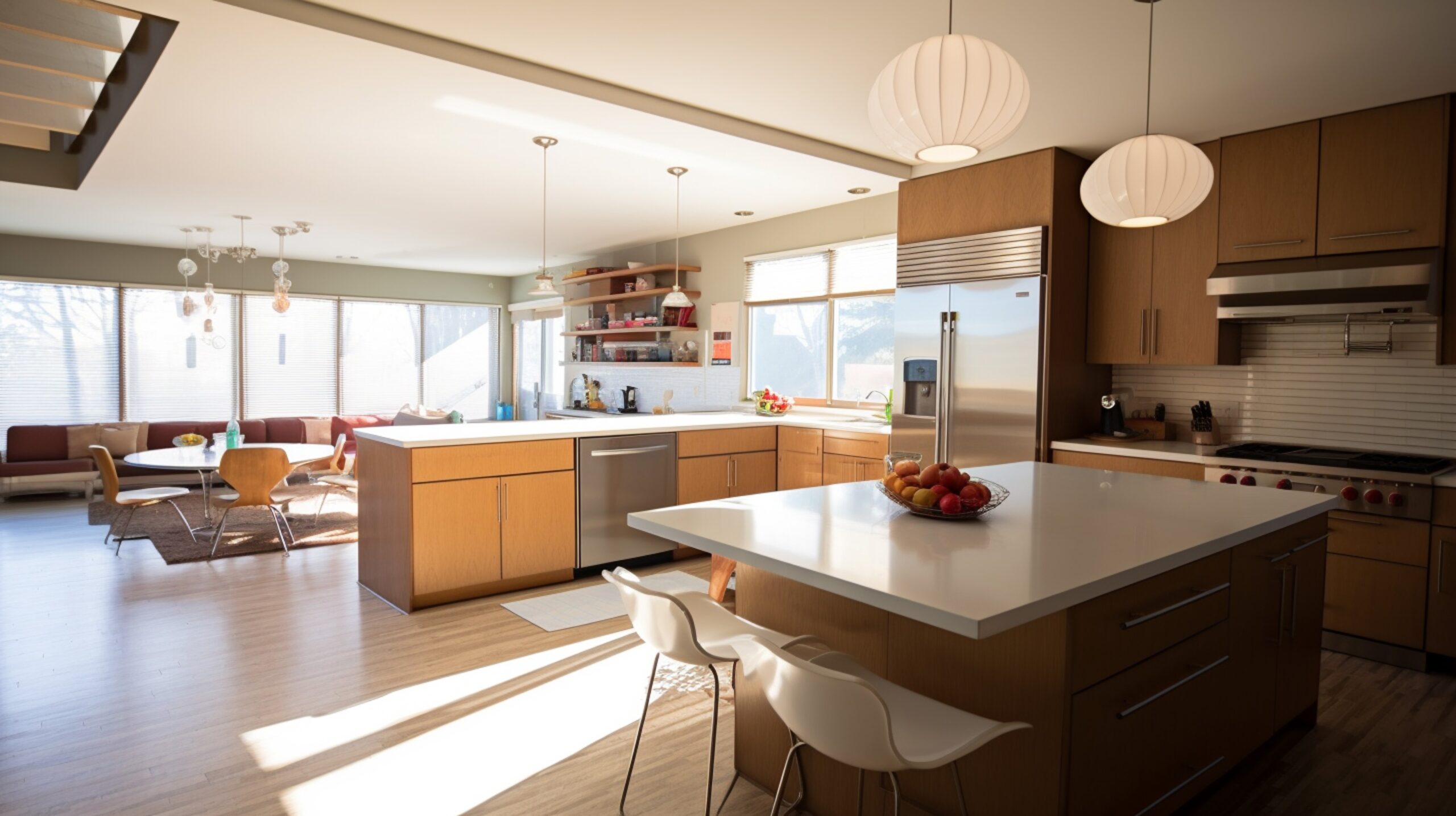
Key advantages of open layouts:
- Enhanced natural light and airy feeling
- Better flow and connection among living areas
- Easier hosting, entertaining, and keeping an eye on children
- A modern, roomy aesthetic that many homebuyers love
Design blogs frequently emphasize that in open-concept Kitchen Remodeling, the removal of walls allows light and sightlines to travel, making even smaller homes feel larger.
Common trade-offs to weigh:
- Cooking smells and noise can drift into the living space
- Less boundary to hide mess or clutter
- Fewer walls for cabinetry, storage, or decorative elements
- More demands on ventilation, sound control, and layout planning
What Is a Closed Kitchen?
A closed kitchen is enclosed by walls, doors, or partitions, creating a discrete cooking zone distinct from living and dining spaces.
Benefits often cited:
- Containment: odors, noise, mess stay in the kitchen
- Privacy: cook without feeling exposed
- More wall surfaces for cabinetry, storage, backsplash, or design elements
- Clear separation of “work” zones vs. relaxation zones
Some homeowners and designers are now reevaluating closed kitchens because in certain contexts, the boundaries and containment they provide help with comfort, focus, and order.
Downsides to watch out for:
- Can feel more isolated or segmented
- Reduced natural light and visual openness
- Can appear smaller or more confined
- Transition and flow may feel clipped (you often have to pass through a door)
Hybrid & Semi-Open Solutions (Best of Both Worlds)
If you don’t want to commit fully to one style, hybrid layouts offer flexibility. Many modern remodeling projects mix open and closed elements to balance benefits.
Popular hybrid design ideas:
- Partial walls or half-walls with countertops or seating
- Sliding or folding glass doors/partitions
- Large pass-through windows or “cut-outs” in walls
- Kitchen islands that act as boundary markers but preserve openness
These provide the ability to open or close off the kitchen depending on use (e.g. leave partition open for gatherings, close it when cooking messy meals).
How to Choose: Which Layout Fits Your Lifestyle
1. Daily Habits & Usage
- Do you cook elaborate meals often or prefer quick prep?
- Do you entertain frequently, or is the kitchen more private?
- Do you want to engage with family or guests while cooking?
2. Noise, Smell & Clutter Sensitivity
- Are cooking sounds or smells bothersome?
- Do you prefer to hide mess behind closed doors or manage tidiness continuously?
3. Lighting & Ventilation Needs
- Open layouts benefit from shared light, but require strong ventilation to prevent odor spread.
- Closed kitchens may need more artificial lighting and HVAC or exhaust upgrades.
4. Storage & Wall Space Requirements
- Closed designs give you more opportunities for upper cabinets or wall-mounted features.
- Open designs often need creative storage like islands, under-counter cabinetry, or built-in shelving.
5. Structural & Budget Constraints
- Removing walls (especially load-bearing ones) adds cost, permits, and structural work.
- Closed layouts often avoid major structural changes but may require enhancements in lighting or ventilation systems.
6. Resale Value & Market Trends
- Open kitchens are currently in high demand in many markets.
- But some buyers still prefer delineated spaces—especially in traditional or classic homes.
- A well-designed hybrid can appeal to both crowds.

Practical Tips When You Go With Either Layout
- For open kitchens: invest in a robust range hood, sound insulation, and smart layout zoning.
- For closed kitchens: choose glass doors, light-reflective surfaces, or windows to keep the space from feeling claustrophobic.
- In any choice: always mock up “walk paths,” test lighting, and imagine daily routines before finalizing.
- Work with a trusted contractor or designer who understands structural, ventilation, and airflow challenges.
FAQs about Kitchen Remodeling
Q: Is an open kitchen always better for resale?
A: Not always. In many markets, open kitchens add value because people want that airy, connected feel. But in more traditional neighborhoods or among buyers preferring privacy and separation, closed or semi-open layouts can be a strong selling point.
Q: Can I convert a closed kitchen into an open one later?
A: Yes — but you must consider load-bearing walls, wiring, plumbing, ductwork, permits, and cost. It’s wise to check structural plans before committing.
Q: Will cooking smells become unbearable in an open kitchen?
A: They might — unless you install a powerful vent hood, keep good airflow, and optimize distancing of cooking zones from living areas.
Q: Does open concept cost more?
A: It can, especially if you have to remove structural walls or reroute systems. But costs depend heavily on your home’s layout and the extent of changes.
Q: Which layout is more energy-efficient?
A: Closed kitchens, because you can confine heating/cooling loads. Open layouts may demand more from your HVAC system to condition a larger shared space.
Final Summary
When it comes to Kitchen Remodeling, the decision between open concept and closed kitchen designs hinges on your lifestyle, space, budget, and priorities. Open layouts bring light, connection, and flow but they demand stronger ventilation, clever noise control, and tidy habits. Closed kitchens offer privacy, containment, and more storage, though they may feel more segmented or darker.
If you’re ready to bring your ideal kitchen to life, whether open, closed, or hybrid—Complete Construction is here to help. We specialize in comprehensive kitchen remodeling services: structural design, cabinetry, ventilation, lighting, and finish work. Let us match your vision with expert craftsmanship, so your kitchen becomes the heart of a home you love. Contact Complete Construction today to get started. Call: (801) 543-1811